
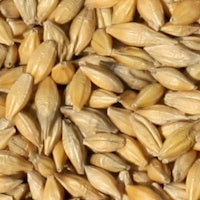
Feed Barley
Feed Barley
- DM:86.0%
- Protein: 12.3%
- ME MJ/kg:13.2%
- Fibre: 5.1%
- Oil: 2.5%
- Ash: 2.6%
Couldn't load pickup availability
Ideal as a ruminant feed, with a protein level varying between 6 and 14%, but on average 11 -12%. Ruminants benefit from it being high in energy, in the form of starch, making it highly fermentable, encouraging milk protein and fast growth. A small proportion (approx 10%) of barley can bypass the rumen unfermented but, as with all cereals, the protein is of average quality being particularly deficient in lysine. Barley is ideal to complement forages but needs careful mineral / vitamin balancing, particularly treated grains. It is especially low in Vitamin A, D, E and calcium. Processing of moist grains with propionic acid reduces Vit E content further.
Typical Analysis
| Dry Matter | 86 |
| Crude Protein | 12.3 |
| DCP | 9 |
| ME | 13.2 |
| Crude Fibre | 5.1 |
| Oil (EE) | 2.5 |
| Ash | 2.6 |
| NCGD | 86 |
| NDF | 23.1 |
| Starch | 57 |
| Sugar | 2.5 |
| Starch & Sugars | 59.5 |
| FME | 11 |
| Salt | 0.25 |
| Calcium | 0.1 |
| Total Phos | 0.4 |
| Av Phos | 0.18 |
| Magnesium | 0.13 |
| Potassium | 0.52 |
| Sodium | 0.03 |
Recommended feeding
(per head / day)
Limits to Usage
Ruminants may suffer acidosis (drop in rumen PH) and / or bloat if fed high levels in a feed. Lambs may produce soft fat in their carcass if dietary inclusion is excessive. Total feed intakes will be reduced if fed finely ground.
Storage / Processing
Disclaimer
Feeding rates are estimates, and other factors, such as animal health and environment, can have a greater impact on how animals perform. There is no guarantee that animals will perform as expected if fed the suggested rates. Rations should be balanced to provide enough energy and protein for animals, and they should include enough forage to keep the rumen healthy. Animals also need access to fresh water at all times.
- Choosing a selection results in a full page refresh.
- Opens in a new window.